
Shell NEODOL® and Shell NEODENE® — your first choice for personal care formulations
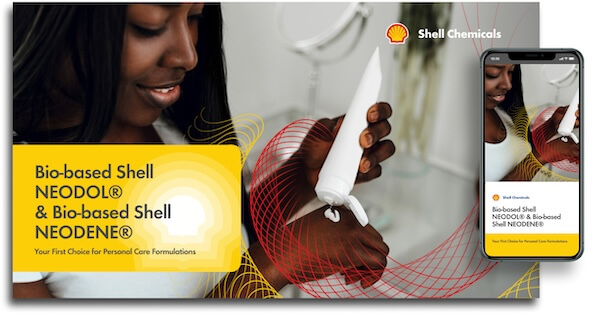
This personal care brochure offers a technical guide to Shell NEODOL alcohols and ethoxylates and Shell NEODENE linear alpha olefins — covering formulation behaviour, supply consistency, and third-party credentials.
Shell NEODOL is a family of synthetic alcohols and ethoxylates used across personal care formulations for cleansing, foaming, and emulsification. Shell NEODENE is a linear alpha olefin valued for its emollient properties in creams, lotions, and cosmetic formulations.
This personal care brochure covers how these ingredients behave, how they're supplied at scale, and the credentials behind them, including example formulations.
Download the brochure to explore:
- How structural characteristics of Shell NEODOL and Shell NEODENE influence product properties like cleansing, emulsification, and foam behaviour
- Bio-based grades of Shell NEODOL, Shell NEODENE, and Shell IPA C+, available at scale through a mass balance approach
- How proprietary manufacturing supports consistent purity, colour, and clarity
- Example formulations across shampoo, body wash, sunscreen, hand soap, and skincare
- Pre-screened ingredient credentials, including EPA Safer Choice, CleanGredients, and Kosher certification
Why formulators, sourcing teams, and product leaders choose Shell Chemicals:
- Formulation support — Versatile building blocks with strong compatibility and solubility across complex systems
- Reliable, global supply — Manufactured at scale with consistent global specifications, so sourcing teams can plan with confidence
- Regulatory readiness — Pre-screened ingredients and palm-free sourcing options that help you stay ahead of shifting compliance requirements
- A responsive partner — Integrated sales, marketing, and technical support, backed by a team that helps you navigate market and regulatory change
Evaluate ingredient impact across formulationsFields marked with an asterisk (*) are required. |